

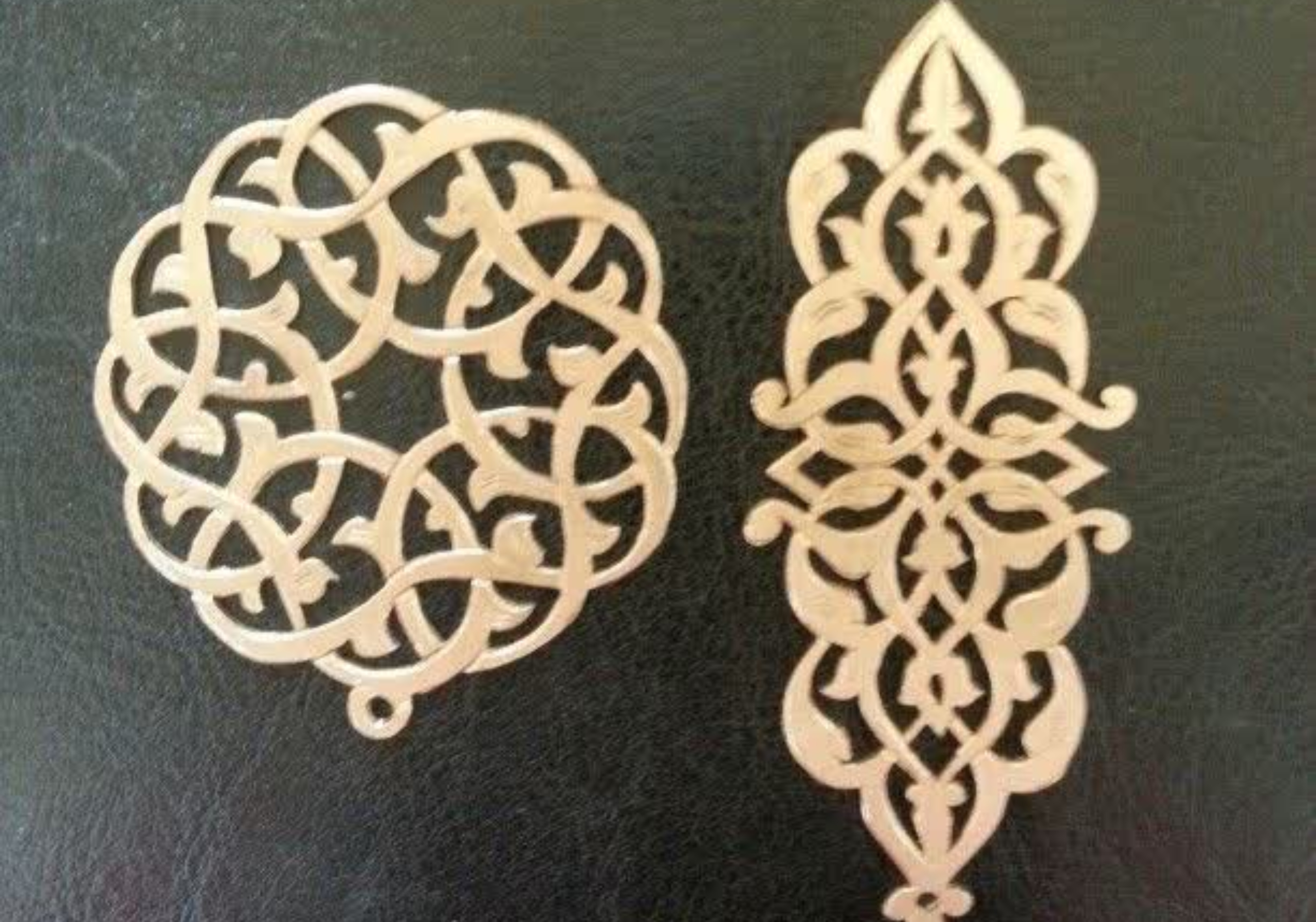
Fiber laser cutting is one of the most advanced and effective methods for cutting metal sheets, which is especially used in various industries for cutting brass sheets. In this article, technical details, advantages, disadvantages, and applications of this technology will be discussed.
1. Introduction
Fiber laser cutting is known as one of the newest and most accurate methods of cutting metals. This technology uses a fiber laser to produce a high power light beam that can accurately cut metal sheets. One of the metals that can be cut well by this technology is brass. Due to its special physical and chemical properties, rice is widely used in many industries such as making jewelry, electronics, and industrial parts.
2. Principles of fiber laser cutting
In fiber laser cutting, the laser beam is guided to the desired point by an optical fiber. This beam concentrates a lot of energy in a small area that melts or vaporizes the material, resulting in cutting. This method is very precise and can create narrow lines and complex cuts with high precision.
2.1. The main components of the fiber laser cutting system
– Laser source: High power laser beam generator.
– Optical fiber: a device for transmitting the laser beam to the desired point.
– Focus lens: to focus the beam to a small diameter and achieve high accuracy.
– Numerical control system (CNC): precise control of beam movement and position for cutting complex designs.
3. Advantages of fiber laser cutting for brass sheets
– High accuracy: fiber laser cutting can easily create complex and delicate patterns on brass sheets due to its high accuracy.
– High speed: This method is faster than traditional methods such as mechanical cutting or water cutting.
– Cut edge quality: Laser cuts usually have smooth and clean edges, which reduces the need for further processing.
– Minimal thermal change: unlike some other cutting methods, fiber laser cutting creates little thermal changes in the material, which helps preserve the physical and mechanical properties of rice.
4. Disadvantages and challenges
– High initial cost: Fiber laser cutting equipment is expensive and requires a lot of initial investment.
– The need for accurate maintenance: laser systems require regular and accurate maintenance to ensure the quality of cutting and the longevity of the device.
– High reflectivity of brass: Due to its shiny surface, brass can reflect a large amount of laser energy, which may make cutting a bit more difficult.
5. Applications of fiber laser cutting for brass sheets
– Electronics industry: production of precise and complex parts for electronic circuits.
– Jewelry industry: creating detailed and delicate designs on brass sheets to make jewelry.
– Decorative industries: cutting brass sheets to make decorative parts such as panels and interior decorations.
6. conclusion
Fiber laser cutting is an advanced and efficient technology for cutting brass sheets, which can meet the needs of various industries with high accuracy and speed. Although this method has high initial and maintenance costs, its benefits justify these costs, especially in the production of quality and precise parts. With the advancement of technology, it is expected that this method will be more widely used in various industries.
For more information, you can contact our experts through the available link.