

Applications of Laser Cutting in Society and Industry
Introduction
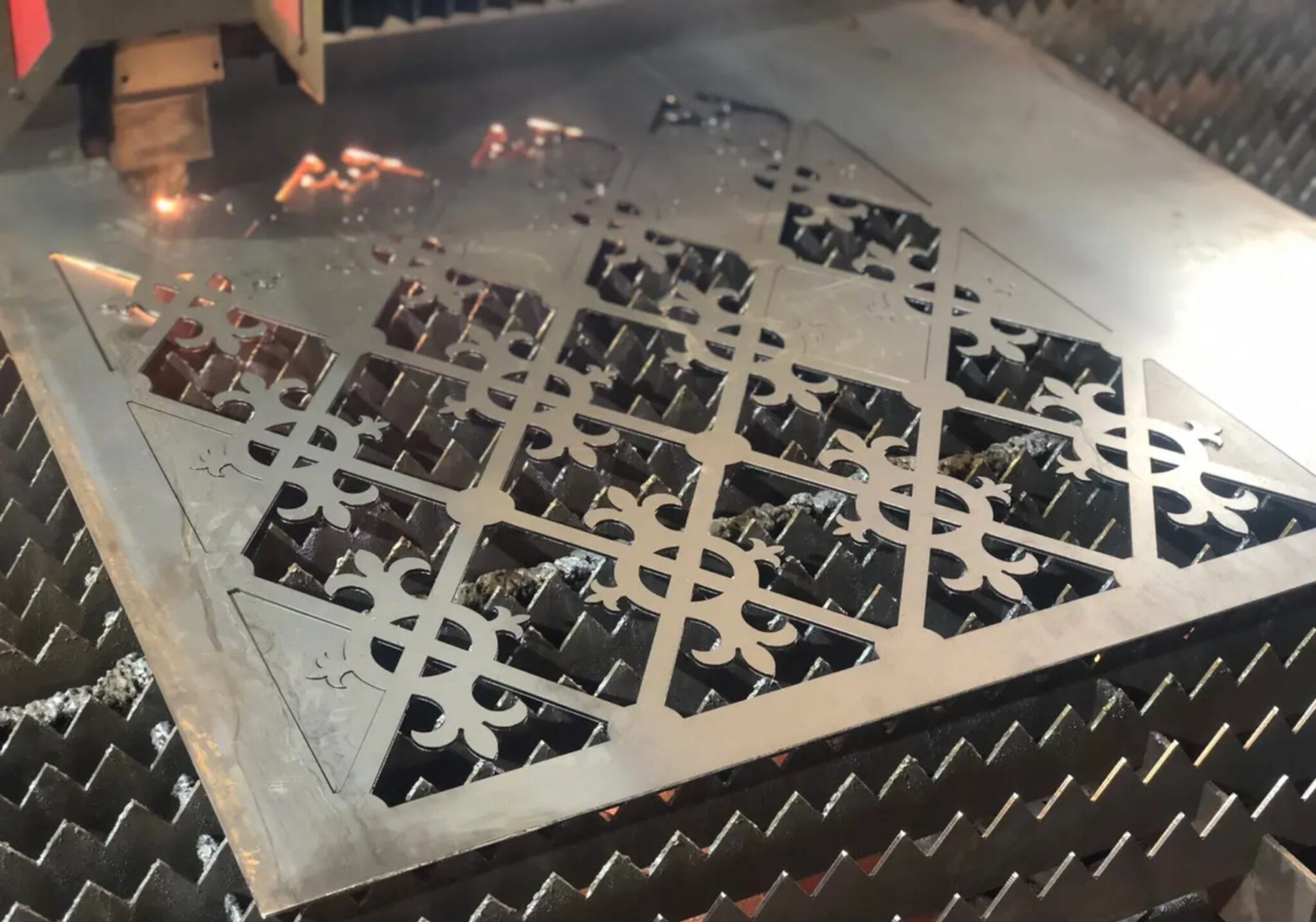
Laser cutting is one of the most advanced technologies for processing metals and other materials, which is used with high precision, speed and quality in various industries. This method, which is based on focusing a laser beam to cut materials, is used in various fields including industry, medicine, art and architecture. In this article, we will examine the main applications of laser cutting in society and its impact on the development of various industries.
1. Automotive Industry
Laser cutting plays an important role in the automotive industry, because metal parts of automobiles must be manufactured with high precision. The most important advantages of using this technology in the automotive industry include the following:
Manufacturing precise and complex parts: Lasers allow cutting small and complex parts without the need for additional machining.
Increased production speed: Reducing production time leads to increased productivity and reduced costs.
Flawless connections: Using laser cutting to manufacture parts such as chassis, doors and engine parts reduces errors and increases vehicle safety.
2. Construction and Architecture Industries
In architecture and construction, laser cutting allows architects and designers to cut intricate and delicate patterns on metals and other materials. Some applications of this technology in this field include:
Designing modern and decorative facades: Using laser cutting to create beautiful and decorative metal facades that give a special look to the building.
Constructing lightweight and durable metal structures: In the skeleton of buildings, bridges, and other metal structures, laser cutting is used to increase accuracy and quality.
Manufacturing custom parts: The ability to produce special and customized parts for special and unique architectural projects.
3. Medical industry and medical equipment
In the medical field, laser cutting is used to manufacture surgical instruments and high-precision medical parts. Some of the most important applications of this technology in medicine include:
Making precision surgical equipment: Surgical knives and microsurgical instruments are cut with lasers to ensure high sharpness and accuracy.
Making medical implants and prostheses: Metal implants such as artificial bones or dental parts are produced with high precision and quality.
Cutting and engraving of medical parts: Numbering and coding of medical equipment for better identification.
4. Advertising and signmaking industry
Another important area in which laser cutting has a significant impact is the advertising and signmaking industry. This technology enables the production of beautiful and creative signs, including:
Making advertising metal signs: Precise cutting of letters and shapes to produce modern advertising signs.
Engraving on various materials: Including metal, wood and plexiglass to produce trademarks and signboards.
Manufacturing 3D advertising elements: Combining cutting and engraving to create innovative designs.
5. Military and Aerospace Industries
The high accuracy and speed of laser cutting has led to this technology being used in the defense and aerospace industries. Some of its applications include:
Manufacturing aircraft and fighter fuselage parts: Using laser cutting to create lightweight and durable parts.
Manufacturing military weapons and equipment: Cutting precise metal parts to produce weapons and military equipment.
Manufacturing satellite and spacecraft parts: Reducing weight and increasing precision of parts with laser cutting.
6. Arts and Crafts
In the world of art and design, laser cutting allows artists to create complex and precise works. Some of its applications include:
Designing and engraving on wood, metal, and glass: For creating artistic and decorative works.
Making custom jewelry and ornaments: Creating special and elegant designs in jewelry.
Interior decoration production: Using laser cutting to make decorative elements.
Conclusion
Laser cutting technology has revolutionized various industries, enabling the production of products with high precision, quality, and speed. From automotive and medical to architecture and art, this technology has penetrated various sectors of society and has had a significant impact on improving the quality of products. Given the extensive benefits of this technology, it is expected that we will see further developments in this field in the future.