

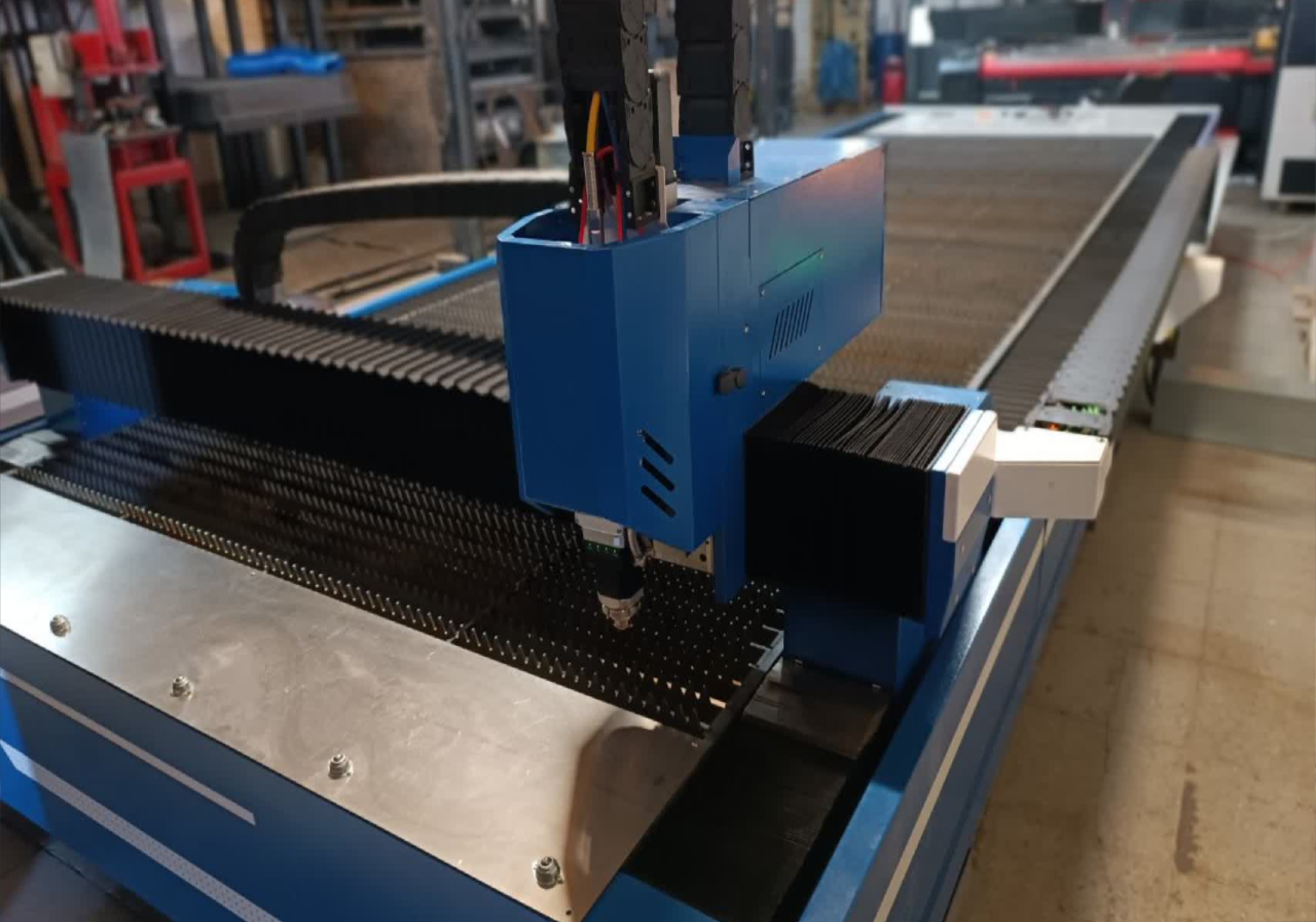
Introduction
Laser CNC is one of the most advanced and widely used technologies in the world of modern manufacturing and engineering. It combines laser technology with computer numerical control (CNC) to perform cutting, engraving, and shaping processes of various materials with high precision and speed. Given the growth of the manufacturing, architectural, medical, and automotive industries, this industry is expanding and plays a key role in the development of new technologies.
History and Development
The use of laser technology in industry dates back to the 1960s, but its integration with CNC systems in the 1980s created a huge revolution in manufacturing capabilities. The first CNC laser machines were designed to cut metals, but as technology advanced, non-metallic materials such as plastic, wood, and glass were also added to the scope of these machines.
Applications
Metal Industries: Precision cutting and engraving of metals such as steel, aluminum, and copper.
Wood and furniture industries: Design and cut high-precision wooden ornaments.
Medical industries: Manufacture of implants, surgical instruments and medical equipment.
Advertising: Engraving and cutting materials for the manufacture of signs and advertising designs.
Electronics: Manufacture of printed circuits and small parts.
Advantages and strengths
High accuracy: Ability to create very precise cuts and engravings.
Speed: Allows faster production than traditional methods.
Material diversity: Ability to work with a wide range of materials.
Waste reduction: Contactless cutting and engraving reduces material waste.
Emerging trends
Artificial intelligence and the Internet of Things (IoT): Combining AI technology with CNC laser machines has facilitated remote monitoring and control.
Increased energy efficiency: Using fiber lasers instead of CO2 lasers has reduced energy consumption and increased efficiency.
New applications: From the production of 3D parts to engraving on sensitive surfaces.
Software advancements: The use of advanced CAD/CAM software has made design and manufacturing more efficient.
Challenges
High cost: Laser CNC machines are expensive in terms of initial cost and maintenance.
Skill requirement: Operating these machines requires expertise and training.
Material thickness limitation: Cutting ability is limited to a certain thickness of material.
Future outlook
The laser CNC industry will experience further developments due to the growing demand in fields such as mass production, aerospace, and medical. It is expected that this technology will penetrate more segments of the global market as costs decrease and machine efficiency increases.
Conclusion
Laser CNC technology plays a key role in improving the quality, speed, and accuracy of industrial production. With increased investment in research and development, this industry can remain as one of the fundamental pillars of the transformation in global manufacturing.