

Introduction
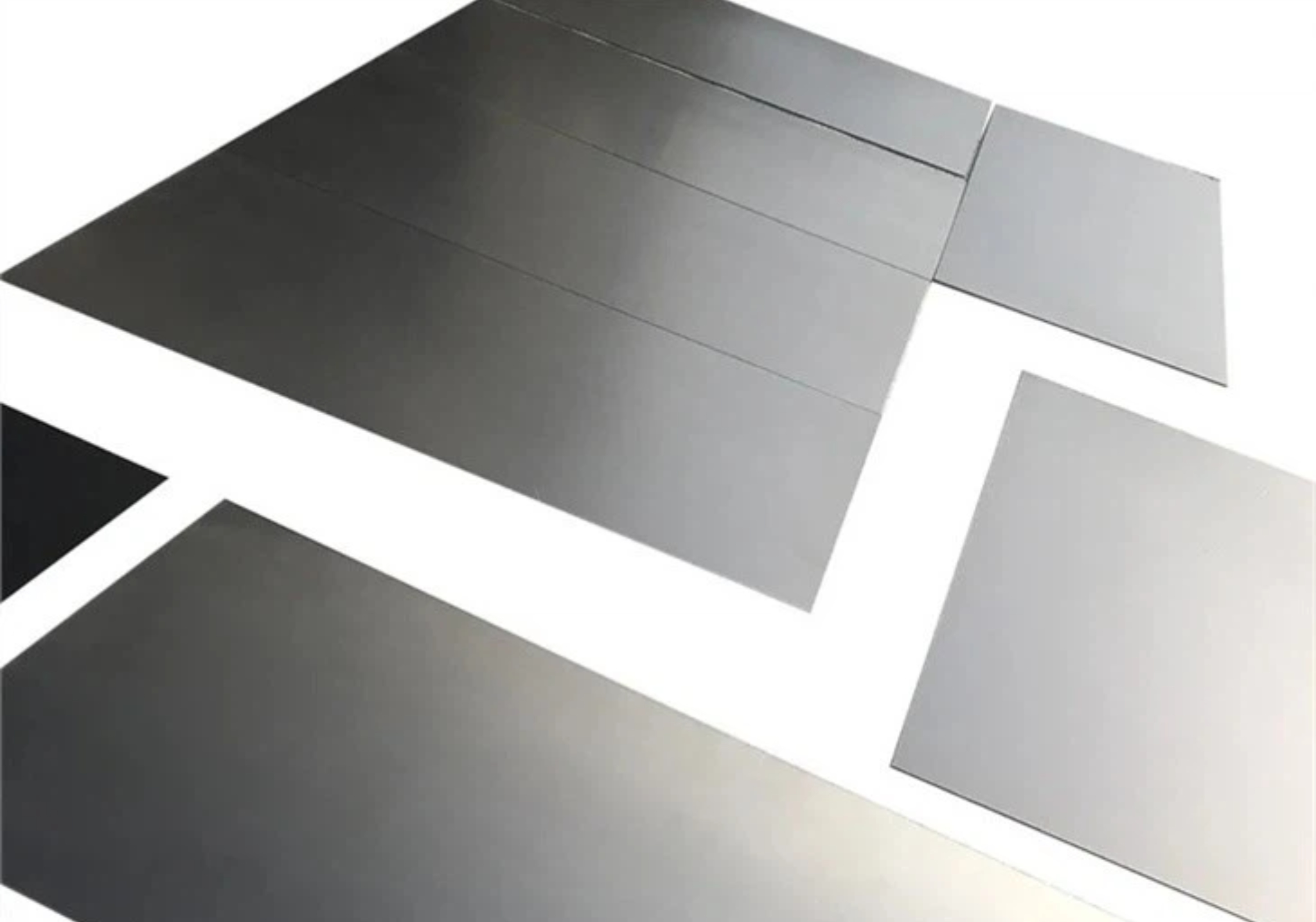
Titanium sheet cutting with fiber laser: Titanium as a very valuable and widely used metal, due to its unique features such as high strength, light weight, excellent resistance to corrosion and high temperature tolerance, in many industries including aerospace, medical industries , automotive and even military industries are used. However, machining and processing titanium is associated with challenges due to its hardness and high strength. In this regard, cutting titanium sheets with fiber laser has been introduced as a new and efficient method that has been able to reduce many of these challenges.
Fiber laser, as one of the latest laser technologies, is rapidly replacing other metal cutting methods such as plasma and traditional cutting. This technology has been able to attract the attention of many industries due to its accuracy, high speed and the possibility of cutting with quality, especially for hard and light metals such as titanium. In this article, the details of cutting titanium sheets with fiber laser are discussed.
History and evolution of fiber laser technology
Fiber laser technology was developed in the 1990s and quickly became one of the most popular methods in the industry. This type of laser uses optical fibers as an amplifying medium, which increases the efficiency and power of the laser. Due to its compact and efficient design, fiber laser has been able to become economically more competitive than other types of industrial lasers (such as CO2 laser).
With the passage of time and technological advances, the fiber laser’s ability to cut various materials has improved, including heavy and hard metals such as titanium. This technology is now recognized as the gold standard for cutting and processing materials in many industries.
Titanium characteristics and cutting challenges
Due to its outstanding features, titanium is used in industries with special needs and harsh environments. Some of these features include:
– High strength-to-weight ratio: Titanium is very light in weight, while its strength is equal to that of steel.
– Corrosion resistance: This metal performs very well, especially in salty and acidic environments.
– High temperature resistance: Titanium can withstand very high temperatures without losing its mechanical properties.
However, titanium machining is challenging due to its special properties. Some of the main challenges in cutting titanium are:
– High hardness: Titanium has a high hardness that makes it difficult to cut and process.
– Low thermal conductivity: this feature causes that heat does not spread quickly from the cutting area during cutting with thermal methods, and this causes heat accumulation and structural changes in the metal.
– Oxidation at high temperatures: Titanium is prone to oxidation at high temperatures, which may affect the cutting quality.
Principles of titanium laser cutting
In laser cutting, the laser beam is irradiated to the metal surface as a concentrated and powerful heat source, and its thermal energy quickly melts or evaporates the material. In titanium cutting, the laser must have the ability to accurately control the thermal and cutting parameters in order to avoid problems such as edge burns, excessive oxidation, and creation of microscopic cracks.
Titanium sheet cutting process with fiber laser
Cutting titanium sheets with fiber laser includes the following steps:
1. Selection of cutting parameters: In this step, parameters such as laser power, cutting speed, and focal distance are carefully adjusted. These parameters depend on the thickness of the sheet and the characteristics of titanium.
2. Laser radiation on the surface of the sheet: a high-power laser beam shines on the surface of the sheet and quickly melts or evaporates the material at the contact point. The movement of the laser beam or the workpiece in a predetermined path leads to the creation of precise and clean cuts.
3. Use of auxiliary gases: To improve the cutting quality and prevent oxidation of the titanium surface, auxiliary gases such as nitrogen or argon are used. These gases empty the environment around the cutting site of oxygen and prevent the metal from reacting with oxygen at high temperatures.
4. Cutting quality control: After cutting is finished, the cut surface is checked for accuracy, cleanliness and the absence of cracks or roughness. If the cutting parameters are set correctly, the cut surface should be smooth and without defects.
Advantages of fiber laser cutting for titanium
Fiber laser cutting technology offers several advantages compared to other metal cutting methods:
1. High precision: fiber laser provides the possibility of cutting with micrometer precision, which is necessary for sensitive applications such as aerospace and medical parts.
2. High cutting speed: compared to traditional methods, fiber laser has a much higher speed and can cut a larger volume of material in a shorter time.
3. High cutting surface quality: Titanium laser cutting usually produces very smooth surfaces without the need for further processing, which helps reduce production costs.
4. Reduced energy consumption: Fiber laser uses less energy than other cutting methods due to its high efficiency in converting electrical energy to laser beam.
5. Flexibility: This technology is easily adjustable to cut complex shapes and special designs, which is of great importance in advanced industries such as aerospace and medicine.
Challenges and limitations in cutting titanium with fiber laser
Despite many advantages, cutting titanium with fiber laser also comes with challenges and limitations:
1. Sensitivity to setting parameters: The quality of fiber laser cutting strongly depends on the cutting parameters (power, speed, auxiliary gas pressure). Incorrect setting of these parameters may lead to defects such as burnt edges or microscopic cracks.
2. Oxidation: Titanium tends to oxidize at high temperatures, which can reduce the quality of the cutting surface. It is necessary to use auxiliary gases such as nitrogen or argon to avoid this problem.
3. Limitation of thickness: Fiber laser cutting works optimally for sheets with limited thickness. Cutting very thick sheets may require much higher powers and more complex settings.
Fiber laser cutting applications in various industries
Titanium is used in many industries due to its unique properties, and fiber laser cutting is also known as an effective method to produce various parts in these industries. Some of the main uses are:
1. Aerospace industry: Titanium is used in the manufacture of parts of airplanes, spacecrafts and satellites due to its light weight and high strength. Fiber laser cutting enables the production of precise and light parts, which is of vital importance in these industries.
2. Medical industry: Titanium is used in the manufacture of implants, prostheses and surgical tools due to its biocompatibility and corrosion resistance. Fiber laser cutting helps to produce precise and defect-free medical parts.
3. Automotive industry: In the automotive industry, titanium is used to produce light and resistant parts that help improve fuel efficiency and reduce the weight of cars.
conclusion
In this article, we investigated the cutting of titanium sheet with laser, which can be briefly defined: fiber laser cutting technology is known as one of the advanced and effective methods in processing and cutting titanium sheets. This method is very important due to its high accuracy, appropriate speed, and high quality of the cutting surface, especially in sensitive and advanced industries such as aerospace, medicine, and automobile manufacturing. Although there are challenges and limitations such as the need to accurately set parameters and prevent oxidation, but with continuous advances in this field, fiber laser cutting is still considered as one of the best methods for cutting titanium.
To get more information about cutting titanium sheet with laser, you can contact our experts through the available link.