

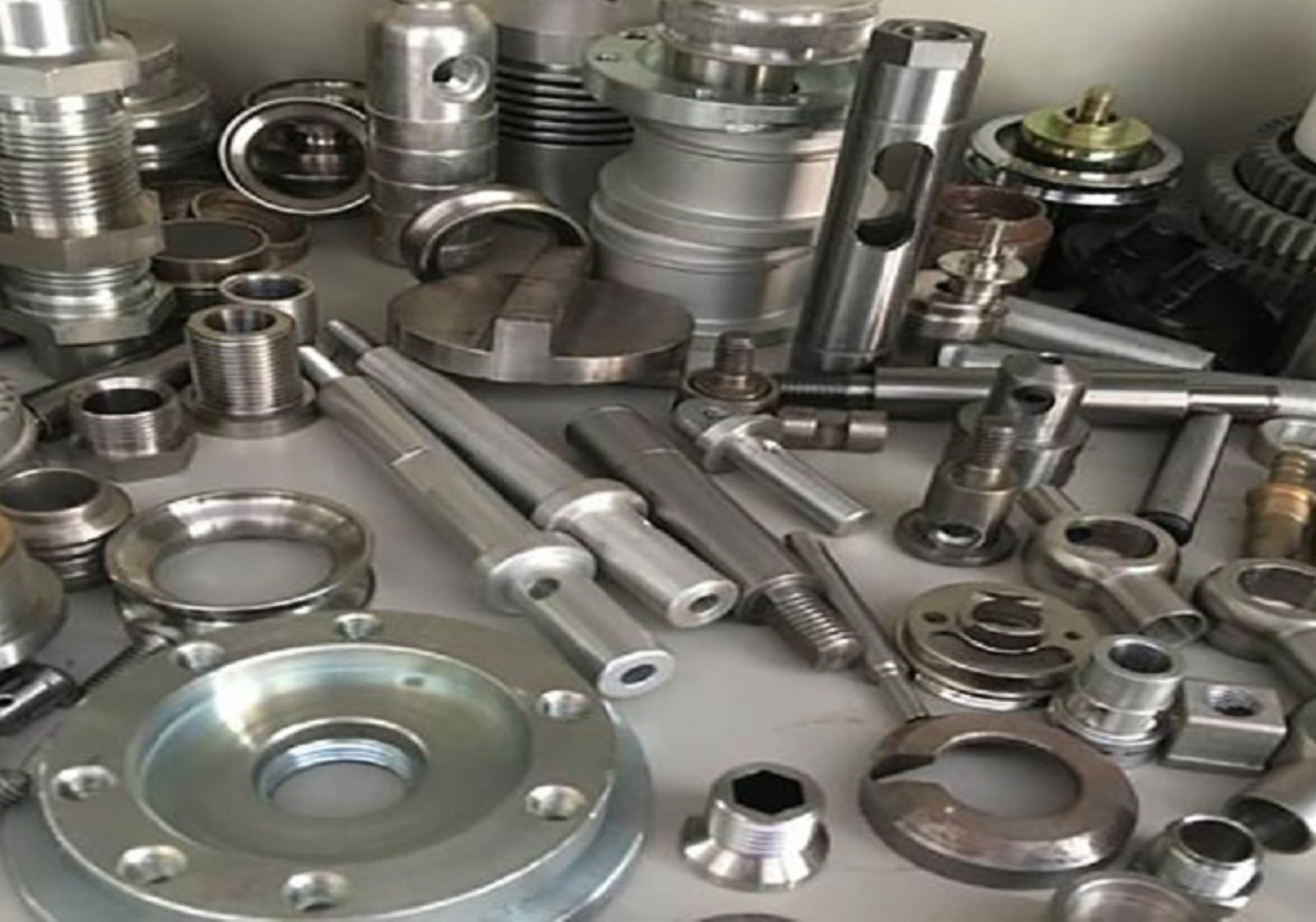
The production of aerospace industrial parts using fiber laser cutting technology is one of the most advanced production methods in the aerospace industry. This technology has become one of the popular methods for producing complex and sensitive parts in this industry due to its high accuracy, reduced production costs, reduced process time, and the possibility of working with different materials. In the following, we will fully review this technology, its applications and benefits in the aerospace industry.
Introduction
The aerospace industry, as one of the sensitive and precise industries, requires the production of parts with high precision and quality. This industry includes the manufacture of airplanes, satellites, rockets and space equipment, each of which requires parts with very high standards and dimensional accuracy. According to these needs, various technologies are used to produce parts in this industry, one of the most important of which is fiber laser cutting technology.
History of laser cutting
Laser cutting technology was introduced in the 1960s as an innovative method for cutting different materials. Initially, gas and solid lasers were used as the main cutting tools. But with the passage of time and the advancement of technology, fiber lasers quickly established their position in various industries, especially the aerospace industry, due to their countless advantages.
Fiber lasers use optical fibers reinforced with rare elements to generate and focus laser light. Compared to gas and solid lasers, these lasers are more efficient and have higher accuracy and can cut hard and resistant materials with less power.
Principles of fiber laser operation
With the help of optical fiber and internal amplifiers, fiber laser produces a strong and focused laser beam that can cut materials with high precision. The optical fiber plays the main role in this type of laser and directs the laser light from the production source to the cutting site. This light beam can quickly focus a lot of energy on a spot, causing the material to melt or vaporize at that point.
In the laser cutting process, raw materials such as metals, plastics or ceramics are quickly cut using high laser heat. This process is strictly controlled so that there are no distortions or defects in the final parts.
Advantages of fiber laser cutting in aerospace
1. High accuracy: One of the biggest advantages of using fiber laser is its very high accuracy. This accuracy is critical for the production of aerospace parts that require very low tolerances. The fiber laser is able to create accurate and error-free cutting lines, which reduces the need for additional processes such as grinding or final polishing.
2. Working with various materials: In the aerospace industry, various materials such as aluminum, titanium, stainless steel and composites are used. Fiber laser can cut a wide range of materials and can cut metals and composite materials with high speed and precision.
3. Reduction of material wastage: In traditional cutting processes, material wastage is very high. But in laser cutting, due to the high precision and the use of very narrow beams, material wastage is greatly reduced, which is especially important in the production of aerospace parts, whose raw materials are expensive.
4. High speed: The fiber laser cutting process is significantly faster than traditional mechanical methods. This increases productivity and reduces production time, which is a huge advantage in the aerospace industry, where time to produce parts is critical.
5. No need for continuous maintenance: fiber lasers require less maintenance than other types of lasers. Due to their simpler and more efficient structure, these lasers have a longer life and reduce the need for frequent stops for repairs.
Fiber laser cutting applications in the aerospace industry
1. Cutting precision metal parts: Many parts used in airplanes and missiles are made of resistant metals such as titanium and stainless steel. Fiber laser is easily able to cut these metals with high precision without creating additional thermal stresses.
2. Making composite parts: Composite materials are widely used in the aerospace industry due to their lightness and high strength. Cutting these materials is difficult due to their layering and special composition, but the fiber laser can cut these materials well.
3. Manufacturing complex 3D parts: One of the biggest challenges in manufacturing aerospace parts is manufacturing parts with complex shapes. Fiber laser cutting enables 3D cutting with high precision and allows manufacturers to produce parts with complex and geometric designs with unparalleled precision.
4. Reducing the weight of parts: By using laser cutting, lighter parts can be produced, because this method allows the precise removal of excess material. This issue is particularly important for the aerospace industry, which seeks to reduce the overall weight of equipment and increase fuel efficiency.
Challenges and limitations
Despite its many advantages, fiber laser cutting still faces challenges. One of these challenges is the high cost of primary equipment. Also, although the fiber laser is very accurate, some materials, such as certain alloys, may require finer adjustments to avoid thermal problems.
Also, in cases where very large and heavy parts need to be cut, there may be limitations in the size and power of fiber lasers, which will require manufacturers to use special and larger equipment.
conclusion
Production of aerospace parts using fiber laser cutting is one of the modern and efficient methods to meet the exact needs of this industry. Despite the challenges that may exist, the many advantages of this technology, including high precision, reduced material wastage and high speed, make it an ideal choice for the production of sensitive and complex aerospace parts.
The use of fiber laser cutting not only reduces production costs and time, but also helps produce high-quality and high-precision parts that can lead to increased performance and safety in the aerospace industry. In the future, it is expected that with further developments in this field, new applications for this technology will emerge and its role in industrial production will increase.
For more information, you can contact our experts through the available link.