

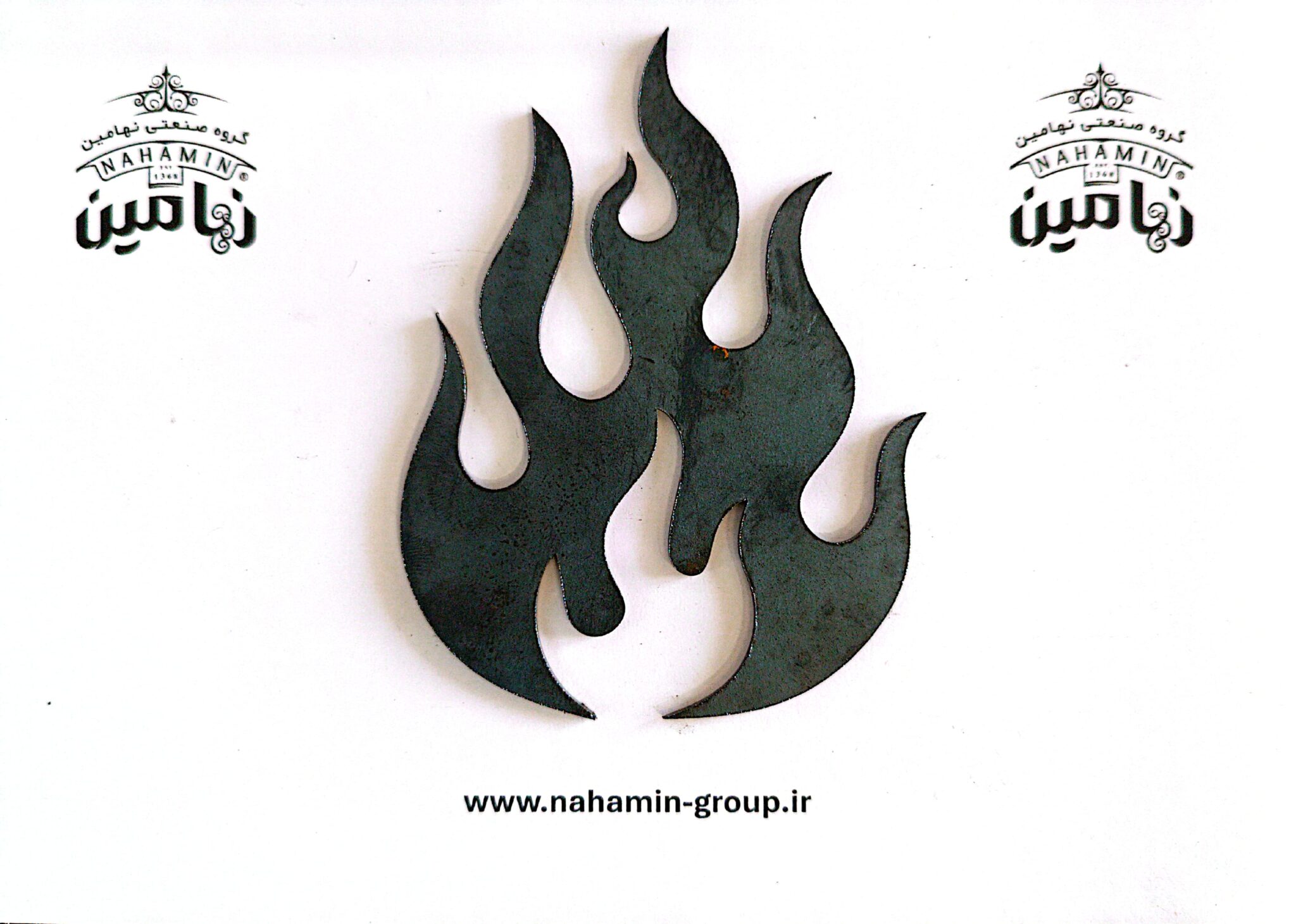
Fiber laser cutting is one of the modern and very efficient technologies in the field of metal cutting, especially steel sheet laser cutting. This technology is widely used in various industries due to its high precision, high speed, and superior cutting quality. In this article, the technical aspects, advantages, disadvantages and applications of this technology will be discussed.
1. Introduction
Steel is one of the most important and widely used metals in various industries. From construction to automobile manufacturing and production of industrial parts, steel plays a key role. One of the advanced methods for cutting this hard and resistant metal is the use of fiber laser cutting technology. Fiber laser cutting, using a focused laser beam, allows accurate and fast cutting of steel sheets.
2. Principles of fiber laser cutting
Fiber laser cutting uses a fiber optic laser to produce a very powerful light beam that can easily pass through metal sheets. This laser beam, with a high focus on a specific point, transfers a lot of energy to that point, which causes the material to melt or vaporize and, as a result, cut it. Computer Numerical Control (CNC) systems are also used to precisely control the movement of the laser beam and create complex designs.
2.1. The main components of the fiber laser cutting system
– Laser source: High energy laser beam producer.
– Optical fiber: transmitting the laser beam to the desired point.
– Focus lens: to focus the laser beam and achieve high precision.
– Numerical control system (CNC): for precise control of laser beam movement and creation of complex designs.
3. Advantages of fiber laser cutting for steel sheets
– High precision: fiber laser cutting is done with very high precision, which is especially important for the production of precise and sensitive parts.
– High speed: This technology enables fast cutting of steel sheets, which increases productivity in the production process.
– Superior cut quality: Fiber laser cut edges are usually smooth and clean, reducing the need for post-finishing operations.
– Minimal thermal changes: fiber laser cutting preserves the physical and mechanical properties of steel by creating the lowest amount of heat in the cutting area.
4. Disadvantages and challenges
– High cost of equipment: fiber laser cutting equipment is expensive and requires significant initial investment.
– The need for regular maintenance: laser systems need careful and regular maintenance to maintain their optimal performance.
– Reflection and absorption of energy: steels with special coatings or shiny surfaces may create challenges in absorbing laser energy, which requires special settings of the device.
5. Applications of fiber laser cutting for laser cutting of steel sheets
– Automotive industry: production of precise and high quality parts for cars.
– Construction industry: cutting steel sheets for the construction of metal structures and building components.
– Manufacturing industries: cutting complex and sensitive industrial parts that require high precision.
6. conclusion
Fiber laser cutting is one of the most effective and advanced methods of laser cutting steel sheets, which can meet the needs of various industries with high accuracy and speed. Although the initial and maintenance costs of these systems are high, the high cutting quality and increased productivity justify these costs. With further advancements in technology, it is expected that this technology will continue to be used more widely in various industries.
For more information, you can contact our experts through the available link.