

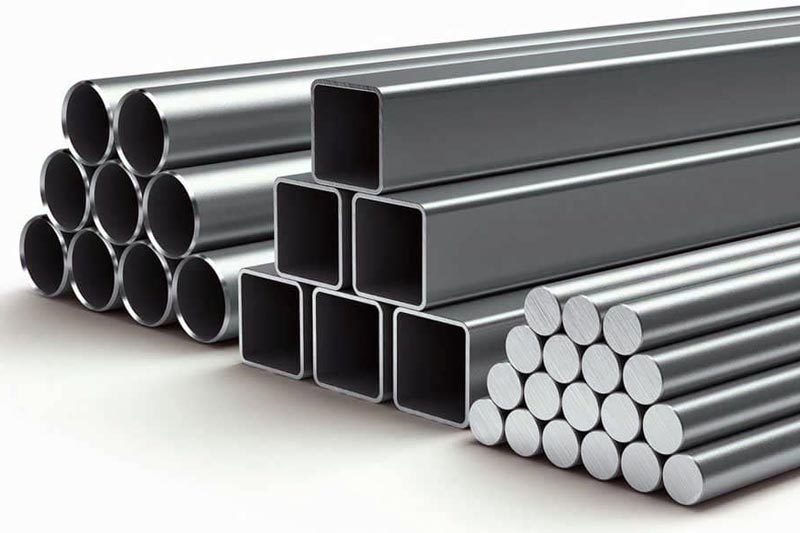
What is stainless steel?
Stainless steel is an alloy made primarily of iron and carbon.
What makes stainless steel different is the addition of chromium (Cr) and other alloying elements such as nickel (Ni) to create a corrosion-resistant product.
When chromium is added to steel, chromium oxide is formed. which acts as a protective surface to prevent corrosion from air and moisture. As happens in ordinary steel. There are more than 100 different grades of stainless steel, but they can be grouped into five types:
Austenitic stainless steel
The most widely used stainless steel is austenitic. This steel has excellent corrosion and heat resistance with good mechanical properties in a wide temperature range. Austenitic steel is used in household containers, industrial pipes and floats and building facades.
Ferritic stainless steel
Ferritic stainless steel has similar properties to mild steel (the most common steel). But it has high resistance to corrosion, heat and cracking. Ferritic steel is usually used in washing machines, steam boilers and interior architecture.
Duplex stainless steel
Duplex stainless steel is a combination of austenitic and ferritic steels, which has the ability to be strong and flexible.
Duplex steel in paper and pulp industries. Shipbuilding and petrochemicals are used. New duplex grades are being developed for a wide variety of applications.
Martensitic stainless steel
Martensitic or austenitic steels can also be classified as hardening stainless steels. This steel is made very resistant by adding elements such as aluminum, copper and niobium.
Corrosion resistance is the main advantage of stainless steels, but it is not the only one.
Stainless steel includes:
Resistant to high and low temperatures
Strong and durable
It is aesthetically appealing
Eco-friendly and recyclable
In addition to chromium, stainless steels are made with silicon, nickel, carbon, nitrogen, and manganese alloys.
For example, nitrogen improves tensile properties such as ductility. Nickel is added to austenitic steel to make it more flexible.
These alloys are used in different amounts and compositions to meet specific applications. For this reason it is very important for stainless steel manufacturers to confirm the percentage of alloy used.
Application of stainless steel
Stainless steel is a versatile material. It was first used for cutlery. And because of its corrosion-resistant features, it quickly entered the chemical industry. Today, corrosion resistance is still of great importance and gradually the mechanical properties of materials are known. Stainless steel can be used as coil, sheet, rod, pipe and wire. which includes:
Kitchen applications
Dish sink
cutlery
Cooking utensils
Surgical instruments and medical equipment
hemostat
Surgical implants
temporary crown (dental)
Architecture of bridges
Monuments and statues
Airport roofs
Making all kinds of handrails
Automotive and aerospace applications
Car body
Rail cars
airplane
Kitchen applications
The most famous use of stainless steel is for cutlery and kitchen utensils. The best type of cutlery is to use 304 steel, which contains (18% chromium, 8%, nickel).
Chemical industry, oil and gas processing
The most demanding industries that use stainless steel are the chemical, oil and gas industries, creating a large market for stainless steel tanks, pipes, pumps and valves.
The first success in stainless steel 304; Dilute nitric acid storage because it can be used in thinner sections.
Several special grades of stainless steels have been produced for greater corrosion resistance over a wide range of temperatures.
Electricity generation
Stainless steel and other corrosion-resistant alloys are widely used in the power generation industry to combat corrosion, especially at high temperatures.
In particular, nickel alloy is used for high temperature resistance and oxidation resistance in fossil fuel power plants.
Nickel alloy and other stainless steels are widely used in flue gas descaling units.
The nuclear power industry uses large amounts of stainless steel, often characterized by a low cobalt content, both to generate electricity and to contain radiation.
Steam and gas turbines use stainless because of their corrosion resistance and heat resistance.
Food production
Large amounts of stainless steel are used in food production and storage. The most common stainless steel for this application is 304 and 316.
In general, stainless steel 316 is used in environments where its hardness is high.
One of the main advantages of stainless steel in this application is that there is no taste to the food that comes into contact with it. does not give and washing that dish is easily possible.
The position of steel in urban planning, building and construction
This material consists of steel, beam and column. The columns of the structure are placed both vertically and horizontally.
Today, they have covered many buildings in the cities of the country. The most basic material used in the metal frame is steel. which is currently one of the most important materials in the construction industry.
One of the most important advantages of steel is that it is used in the metal frame.High resistance, weldability, malleability, flexibility, homogeneity and elasticity are considered.
Using this structure in Sa
مطالب عالی و آموزنده ای بود .